

In actual production, the temperature of the chrome plating solution should be controlled at 60°C, with fluctuations not exceeding ±2°C. Temperatures that are too high or too low will affect the adhesion of the chrome coating.
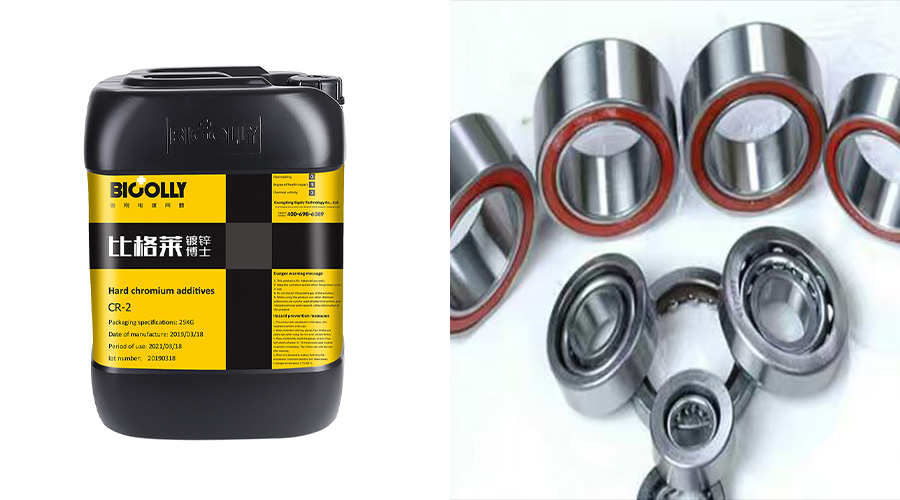
Hard chrome plating solutions with hard chrome additives generally require a current density of 50–60 A/dm². However, when plating plants encounter issues such as imbalance in plating solution composition, uncontrolled solution temperature, changes in process methods, replacement of substrate materials, overly complex geometry of the plated parts, or failure to install auxiliary anodes or shielding cathodes when required, applying current according to the specified current density in the instructions may make it difficult to obtain an ideal hard chrome coating.
Therefore, under the guidance of the hard chrome additive manufacturer Bigely, the current density should be adjusted promptly according to the actual conditions of the plated parts and the plating solution.
During long-term use of the hard chrome plating solution, the following three reasons cause gradual accumulation of impurities:
This results in the gradual accumulation of iron impurities, copper impurities, chloride ion impurities, organic impurities, and nitrate impurities in the chrome plating solution. When these impurities accumulate to a certain level, the hard chrome plating solution becomes turbid and dark in color, electrical conductivity decreases, tank voltage rises, current becomes unstable, throwing power declines, the bright plating range narrows, and both the adhesion and hardness of the coating decrease. Therefore, maintenance and management of the chrome plating solution must be strengthened to eliminate fault phenomena in their early stages.