Nickel ion content
When people mention deposition rate, they often associate it with the content of the main salt, thinking that simply increasing the main salt content will also increase the deposition rate.
However, during the R&D process, Bigely (the electroless nickel plating solution manufacturer) discovered that due to the presence of complexing agents, the main salt concentration has little effect on the deposition rate. When the Ni²⁺ content in the plating bath is below a certain value, the deposition rate is directly proportional to the Ni²⁺ concentration. But if the Ni²⁺ content becomes higher, it will instead reduce the deposition rate.
So, when using
Bigelyi
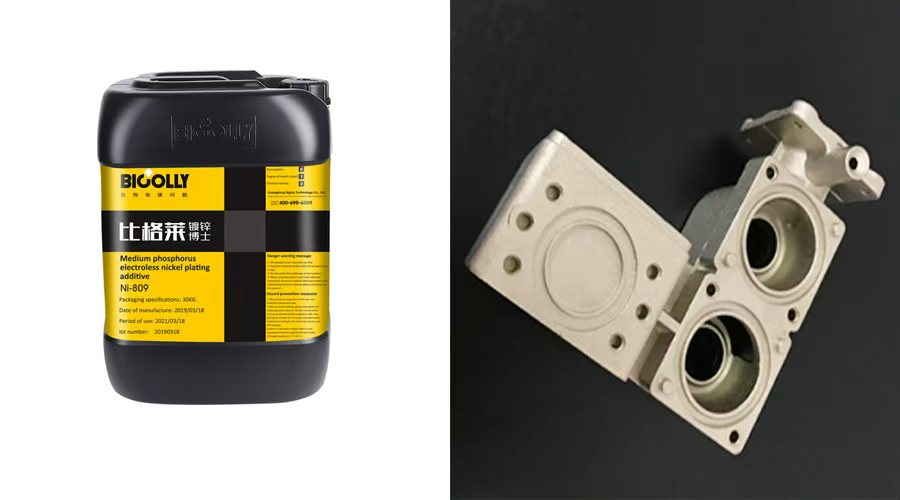
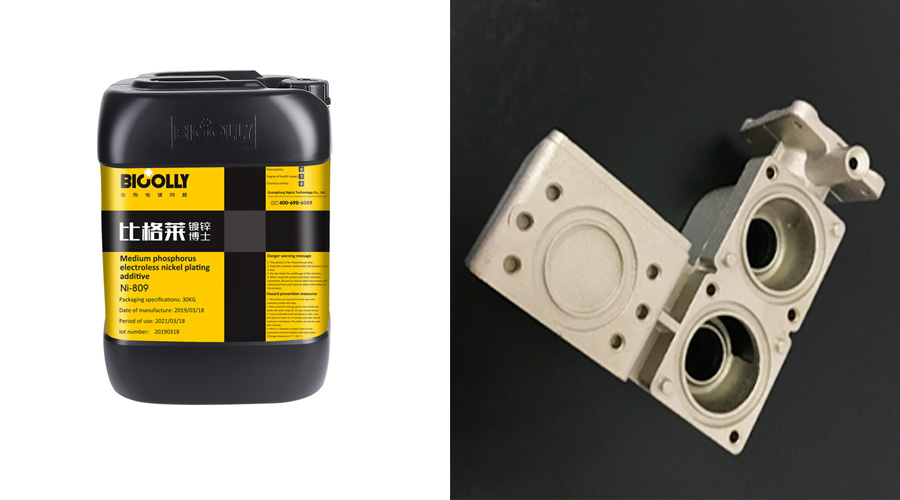
electroless nickel plating solution Ni-809, how should the metal nickel content be controlled? It is recommended to control it at 5.4–6.3 g/L in order to obtain the optimal deposition rate.
Sodium hypophosphite content
Bigely engineers have previously studied the influence of main salt and sodium hypophosphite concentrations on deposition rate and found that only when the proportion of complexing agents is maintained under appropriate conditions does the change in sodium hypophosphite content have a significant effect on the deposition rate.
In production practice, some electroplating factories reported slow deposition rates to us. After in-depth investigation, it was found that they were preparing the
electroless nickel plating solution themselves. Due to a lack of technical experience and channels, they did not know which complexing agents to add, nor how to control the ratio of Ni²⁺ to sodium hypophosphite, which seriously affected production progress and caused the loss of many orders. In fact, choosing the commercial electroless nickel
plating solution Ni-809 can solve this problem. During the plating process, you only need to replenish the consumed main salt, reducing agent, pH adjuster, and an appropriate amount of additives. It is very convenient to use, and both the deposition rate and coating performance can be guaranteed.