
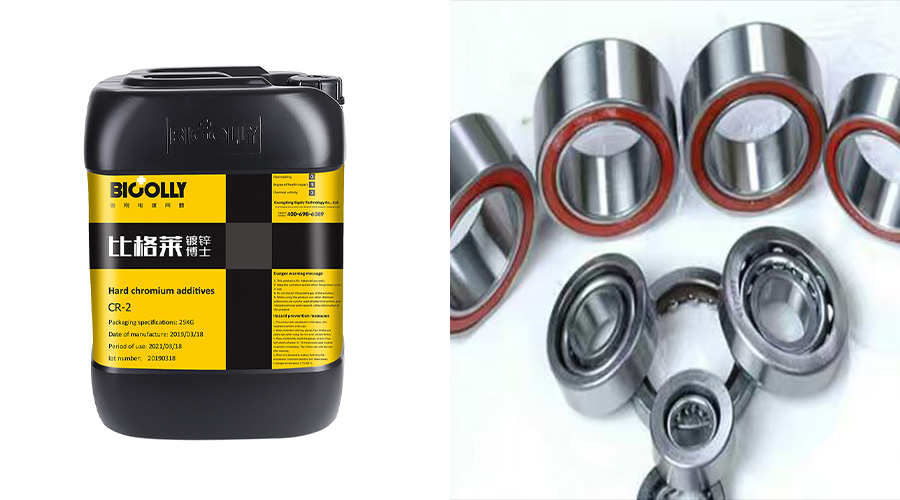
The adhesion of the electroplated hard chrome coating is one of the main inspection indicators of the coating. Poor coating adhesion will directly affect the service condition and lifespan of the plated parts. In the long-term process of developing hard chrome additives and providing after-sales service to customers, we have summarized methods to improve the adhesion of electroplated hard chrome coatings.
Temperature and Current Density
In the actual production process, the temperature of the chrome plating solution is controlled at 60°C, with a fluctuation range not exceeding ±2°C. Temperatures that are too high or too low will both affect the adhesion of the chrome coating.
The general current density for hard chrome plating solutions with hard chrome additives should reach 50–60 A/dm². However, when electroplating plants encounter issues such as unbalanced plating solution composition, loss of temperature control of the plating solution, changes in process methods, replacement of base materials, overly complex geometry of the plated parts, or situations where auxiliary anodes or shielding cathodes should be installed but are not, following the current density specified in the instruction manual to supply current may make it difficult to obtain an ideal hard chrome coating.
Therefore, it is necessary to timely adjust the current density under the guidance of the hard chrome additive manufacturer Bigely, according to the actual conditions of the plated parts and the plating solution.
Impurity Contamination
During long-term use of the hard chrome plating solution, the following three reasons cause issues:
③ Corrosion and dissolution in the internal cavities, blind holes, and other low current density areas of the workpieces during the plating process.
Iron impurities, copper impurities, chloride ion impurities, organic impurities, and nitrate impurities in the chrome plating solution will gradually accumulate. When these impurities accumulate to a certain amount, they will cause the hard chrome plating solution to become turbid and black in color, decrease in conductivity, increase in tank voltage, unstable current, reduced throwing power, narrowed bright range, and decreased coating adhesion and hardness. Therefore, it is necessary to strengthen the maintenance and management of the chrome plating solution to eliminate fault phenomena in their infancy.
Have any questions about the above content? Or would you like to learn more process knowledge about hard chrome additives?
Please feel free to contact us at any time.


