

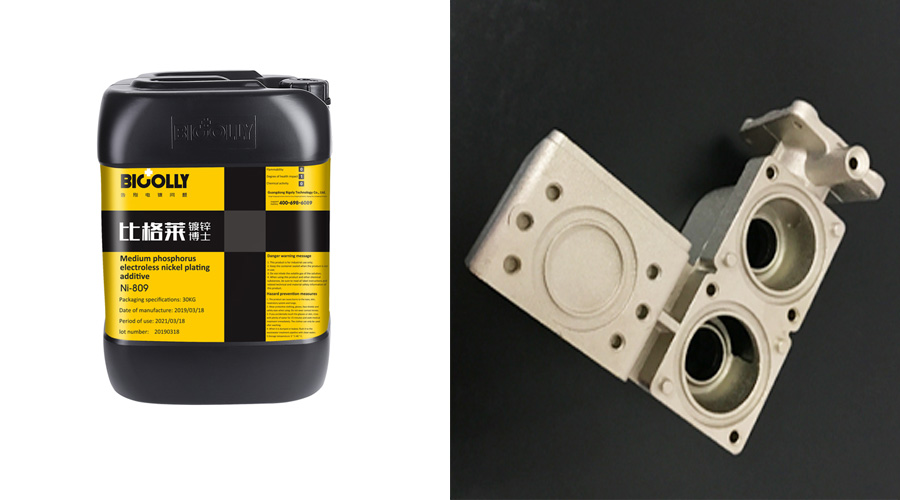




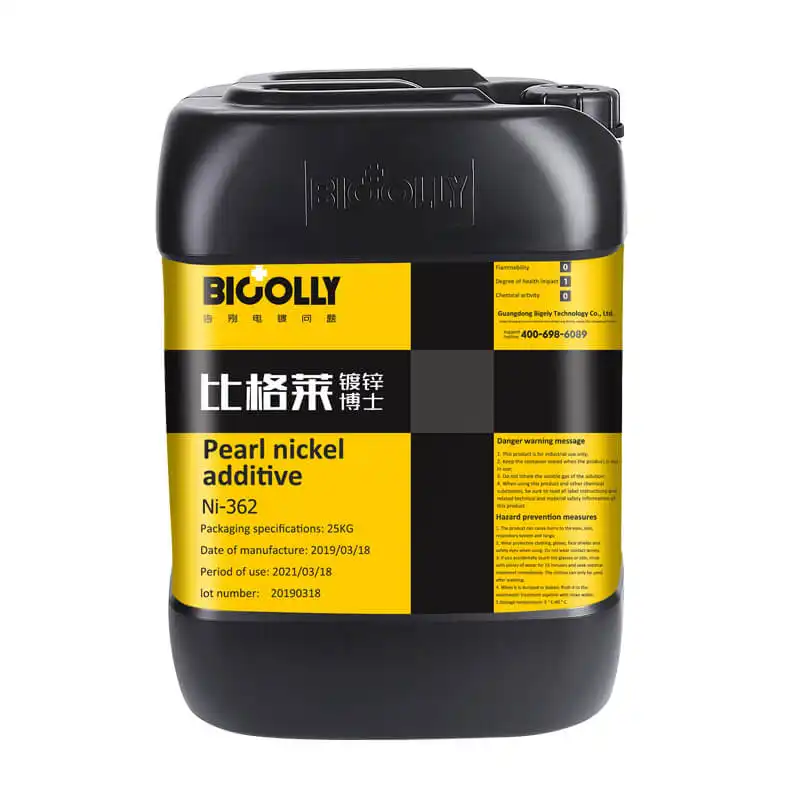

In the nickel plating production process, nickel plating additives are added normally, but the coating on the workpiece is prone to burning, which seriously affects the appearance and performance quality of the workpiece. What are the reasons why workpieces are prone to burning?
Bigely Technology has conducted an analysis based on on-site experience and product characteristics, mainly for the following four reasons:
1.The concentration of nickel salt in the plating solution is too low. Nickel salts not only provide necessary nickel ions, but also increase the current efficiency of the cathode. When the concentration of nickel salt in the plating solution is too low, the current efficiency of the cathode decreases, the upper limit of the allowable current density range becomes smaller, and the workpiece is prone to burning.

2.The temperature of the plating solution is too low. Appropriately increasing the temperature of the plating solution can improve the solubility and charging ability of salts in the plating solution, increase the current efficiency, and accelerate the diffusion rate of nickel ions at the cathode, reducing the internal stress of the coating. When the temperature of the plating solution is low and other parameters remain unchanged, nickel ions can only slowly migrate to the vicinity of the cathode for discharge deposition, and the workpiece is prone to burning.
3.The pH value of the plating solution is too high. Although plating solutions with high pH values have good coverage and high cathode current efficiency, when the pH value is too high and the nickel salt concentration is low, a light green hydroxide nickel precipitate that is slightly soluble in water will be generated, resulting in a lower nickel salt concentration in the plating solution.
4.The cathode current density is too high. Generally, the concentration of the plating solution is high, the pH value is low, and a higher cathode current density can be used during heating and stirring. When the temperature and concentration are low, only a smaller cathode current density can be used, because when the current density is high, the positive and negative ions near the cathode cannot reach equilibrium, which will cause the coating to burn.
So, when using nickel plating additives in the production process, we should pay attention to these four points to avoid burning the workpiece and affecting production efficiency, thereby reducing production costs. If you are interested in nickel plating additives, please contact Bigely customer service for free samples and detailed technical information!


