
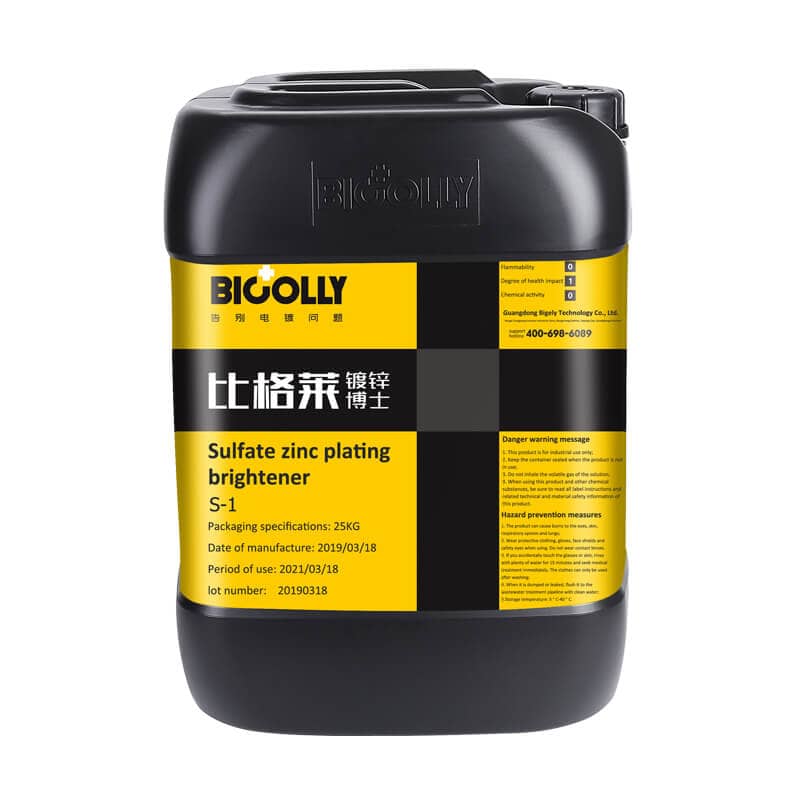

Maintaining and adjusting the pH value of the plating solution is crucial in the production process of using acidic zinc plating brighteners.
The pH value in the plating solution should be controlled at 5-6, as being too high or too low is not conducive to production. When the pH value is less than 5, the surface of the galvanized layer will fog, and the dispersibility and coverage ability of the plating solution will decrease; When the pH value is greater than 6, the plating solution becomes turbid, the brightness of the galvanized layer decreases, the coating becomes rough, and the edges and corners are easily burnt.

In order to effectively control the pH value of the plating solution, in addition to timely adding hydrochloric acid for adjustment, the following measures can also be taken:
1.Regularly analyze the content of boric acid in the plating solution and promptly supplement the amount of boric acid. Boric acid should be controlled at 35-40g/L to ensure buffering effect on the plating solution.
2.When stopping production, the anode plate should be removed in a timely manner to reduce the chemical dissolution of zinc anode in the plating solution.
3.During the production process, it is necessary to avoid workpieces falling into the plating tank. Workpieces that fall into the tank should be promptly salvaged to reduce the dissolution of zinc and iron in the plating tank.
4.The workpiece should be charged into the groove as much as possible to ensure that the zinc layer fully covers the surface of the workpiece as soon as possible after entering the groove.
In this way, in the production process of electroplating zinc acid, we can control the stability of pH value to ensure stable production and better use of acid zinc plating brightener. If you would like to learn more about acid zinc plating brighteners, please feel free to call us for consultation. Our engineers at Bigely are always available to answer your questions.


