


In the production process of using sulfate tin plating additives, due to the continuous addition of stannous sulfate to the plating solution, Sn2+will deposit and be consumed, while SO42-, apart from carrying out losses, does not participate in electrode reactions and can only accumulate in the plating solution.
As the content of SO42- increases, there will be no particularly serious consequences. But as the content of SO42- increases, the viscosity of the plating solution will increase, leading to increased losses and waste of the plating solution. In addition, as the resistance of the plating solution increases, the voltage will rise and the brightness of the coating will decrease.

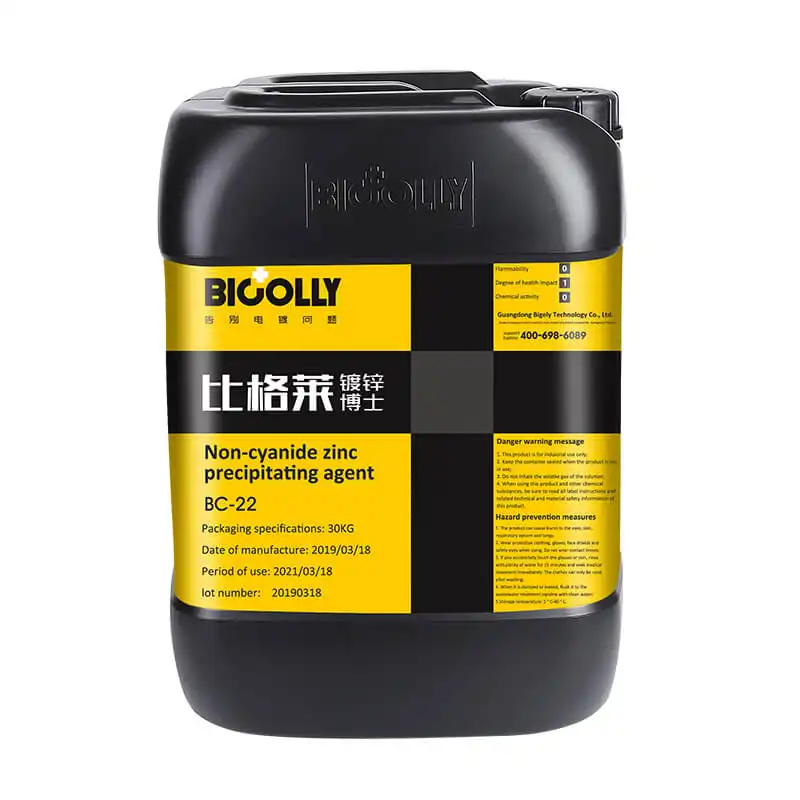
When the content of SO42- in the plating solution is too high, it is also not good. So how should we remove the sulfate ions in the plating solution? A relatively simple method is to use CaCO3 or Ca (OH) 2 as precipitants, which will not change the performance of the plating solution and will not leave harmful substances in the plating solution.
The reaction of CaCO3 treatment of plating solution is relatively slow. Adding CaCO3 to the plating solution, stirring thoroughly, and letting it stand for 4 hours, the plating solution is basically free of precipitation after filtration. The content of Sn2+will decrease because some Sn2+forms SnCO3. The reaction of Ca (OH) 2 treatment of plating solution is relatively fast, the precipitation is relatively complete, the loss of Sn2+is relatively small, the cost is low, and the treatment effect is good.
Therefore, when using sulfate tin plating additives, excess sulfuric acid in the plating solution can be treated with CaCO3 or Ca (OH) 2. If you are interested in sulfate tin plating additives, please contact Bigely customer service for free samples and detailed technical information!


