

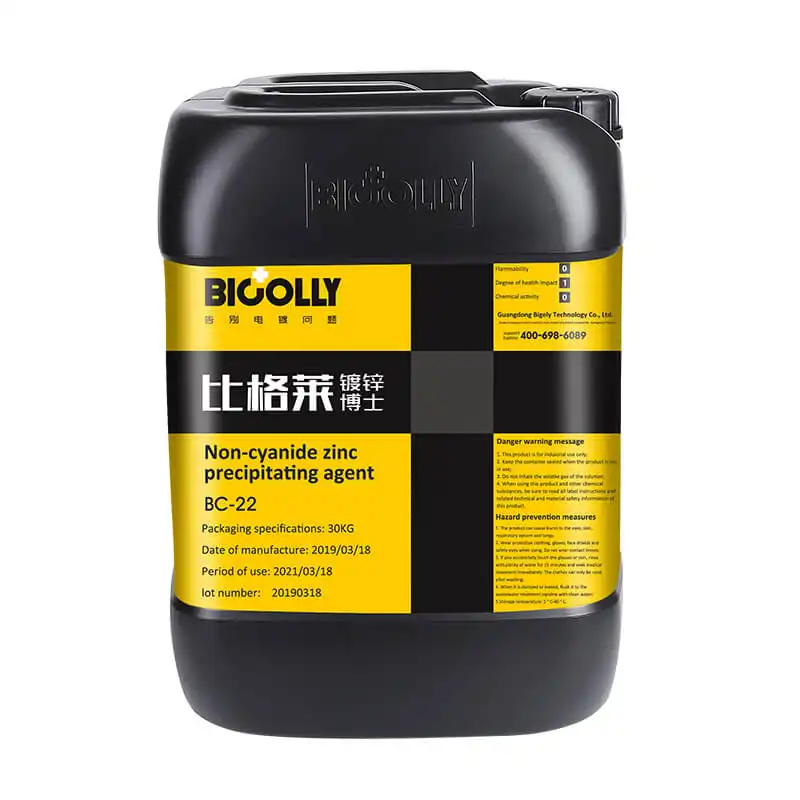

In the production process using alkaline zinc nickel alloy additives, corrosion-resistant zinc nickel alloy coatings with nickel content ranging from 12 to 16 can be obtained on the workpiece. Sometimes the coating of the workpiece may peel and bubble, seriously affecting the appearance and performance of the workpiece. So what causes the coating to peel and bubble?
Bigely Technology has analyzed the characteristics of alkaline zinc nickel alloy additives based on on-site experience and products, mainly including the following six points:
1.Poor pre-processing. Incomplete oil removal, unclean water washing, or surface contamination after cleaning of workpieces can lead to blistering of the coating. During the production process, the concentration and temperature of the oil removal solution should be adjusted, or the water washing process should be strengthened.
2.Poor acid activation. The presence of oil stains or rust on the surface of workpieces due to poor acid activation can hinder the contact between the coating and the substrate, leading to the formation of bubbles and peeling during the production process.

3.Excessive brightener for zinc nickel alloy. Excessive use of general brighteners can increase the internal stress of the coating, leading to blistering of the coating. When there is an excess of brightener in the plating solution, electrolysis or activated carbon adsorption treatment should be used to reduce the content of brightener in the plating solution.
4.The cathode current density is too high or too low. During the production process, if the current density is too high, the coating will be rough, and high current will easily burn it. The brittleness of the coating will increase, and it is easy to bubble; The current density is low, and additives are easily adsorbed in the coating and not easily desorbed. The coating contains a lot of organic matter and is brittle, making it prone to foaming.
5.The nickel content in the coating is too high. When the nickel content in the coating is greater than 16%, the coating is difficult to passivate, the hardness and internal stress of the coating increase, and it is easy to have bubbles and brittle cracks. Regular analysis and adjustment of the concentration of plating solution components should be carried out during the production process to control the nickel content in the coating within the process range.
6.There are too many organic impurities in the plating solution. As production progresses, organic impurities in the plating solution will continue to accumulate. When they accumulate to a certain extent, the brightness of the coating will decrease, and phenomena such as pinholes, fogging, darkening, high brittleness, and high porosity will occur. During the production process, the plating solution should be regularly treated with activated carbon to reduce the impact of machine impurities on the plating solution.
So, when using alkaline zinc nickel alloy additives, we should pay attention to the above 6 points to avoid peeling and foaming of the workpiece coating, and reduce the occurrence of faults. If you are interested in alkaline zinc nickel alloy additives, please contact Bigely customer service for free samples and detailed technical information!


